You can't wish for what you don't know exists.
We cannot desire something we do not know exists.
Nor should we aspire to be something that isn't even on the map.
Therefore, one of the most important tasks in a therapeutic process—or in personal development, or simply in life—is recognize us.
And here's the real problem: looking inward is scary.
Not because of what is "bad".
But for what I can destabilize us: discovering needs we didn't know we had, parts of ourselves we didn't know, internal voids that had been asking for attention for years without a name.
Before any reform, the terrain must be surveyed.
Measure it. Understand its distribution. See its orientation.
Knowing where the light comes in… and where it doesn't.
With a house, we understand it easily.
It's more difficult with one person, because we are polyhedral structures: sides, edges, recesses.
Everyone has their own inner spaces:
- some almost unexplored,
- others used to the point of exhaustion,
- others closed out of fear,
- and others so hidden that we don't even know they exist.
And yet we try to "make the most of ourselves", enjoy ourselves, live coherently... without knowing ourselves.
Not working.
Getting to know each other isn't just about looking at each other.
It's also about looking at yourself in the reflection that others give back.
Because there are few things as precise for self-discovery as observation:
- What are people like when they're around you?,
- What are you like when you're with them?,
- what kind of people surround you,
- It depends on the type of people you choose to surround yourself with.
Sometimes, life shouts it to you without words:
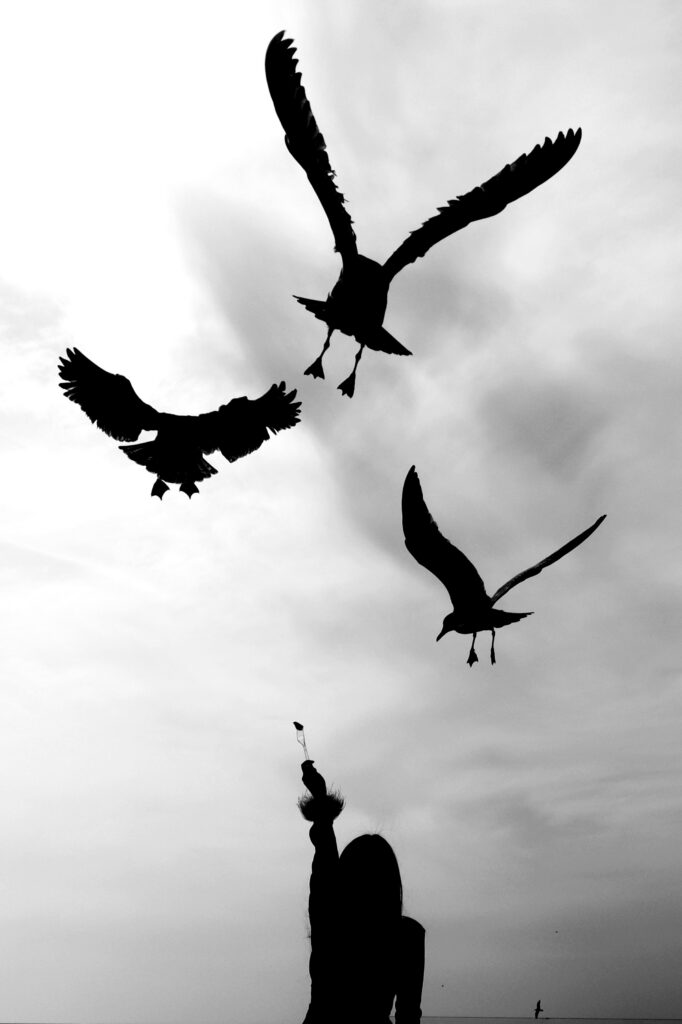
If you often encounter eagles… you might be one too.
Ask them what it's like to fly.
And then… fly.