There are lives that are born under a diagnosis.
And yet there are lives that defy all predictions.
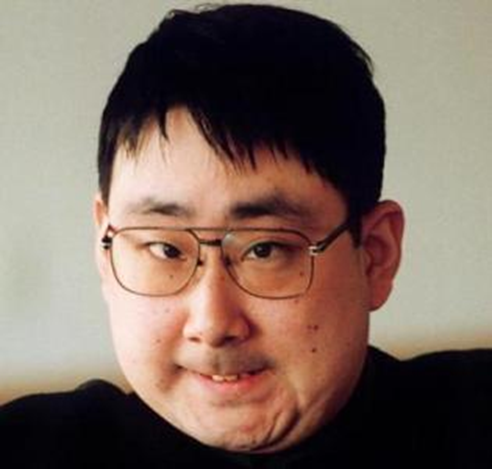
Hikari Ōe was born in Tokyo on June 13, 1963, the son of Nobel laureate Kenzaburō Ōe and editor Yukari Ikeuchi. He was born with a severe brain herniation. The medical advice was straightforward: let him die. His parents made a different decision. They chose surgery. They chose life.
The operation saved him, but it didn't leave him unchanged. Autism, intellectual disability, epilepsy, visual and motor limitations. His existence was placed in the territory that many call "impossibility." However, something different began there: not a story of normalization, but a story of meaning.
During her childhood, Hikari barely spoke. Verbal language wasn't her way. Until one day, a bird's song came from the television. Something clicked. It wasn't just an auditory stimulus. It was a calling. Her parents bought her a record of birdsong. She listened to it over and over, with obsessive concentration. She memorized every nuance.
Some time later, while walking through the countryside, he recognized the actual song of a bird and repeated, with astonishing accuracy, the female voice on the record that announced its name. It wasn't empty echolalia. It was recognition, encoding, translation. Sound was his language.
That's when they understood something crucial: where language failed, music could emerge. They found her a piano teacher, Kumiko Tamura. Patience, repetition, structure. The keyboard became an organizing system. She wasn't just learning notes: she was building neural pathways, internal rhythms, regulatory maps.
From a neuropsychological perspective, the phenomenon is clear. The sound acted as a somatic anchor, a sensory stimulus that organized emotion, attention, and memory. The bilateral rhythmic repetition of the piano was not just musical learning; it was functional integration. The body, emotion, and environment aligning in a single pattern.
In the 1990s, Hikari established himself as a composer of chamber music. Short, delicate pieces for piano, flute, and small ensembles. Simple classical structures, melodies full of tenderness, and a clean melancholy, without excessive drama. His first album, Music of Hikari Ōe (1994), surpassed one million copies sold. An exceptional feat for a contemporary composer with an intimate aesthetic.
It is not grandiose music. It is music that breathes. That evokes seasons, landscapes, inner states. There is something primal and at the same time profoundly human in his compositions: an attempt to order the world through sound.
The figure of Hikari permeated her father's work. In novels such as A personal matter, Kenzaburō Ōe narrated his own inner journey: from initial rejection to absolute commitment to his son's life. He did not idealize the process. He showed it raw. The pain, the shame, the confrontation with the limit. And then, the ethical decision.
Following Kenzaburō Ōe's death in 2023, critics underscored something obvious: much of the moral force of his literature stemmed from that bond. Hikari was not an abstract symbol. She was a concrete presence that compelled her father to redefine the meaning of responsibility, dignity, and love.
Today, at over sixty years old, Hikari continues composing and living with her family. Her miniatures are still played on specialized radio stations and inclusive music programs. She doesn't make headlines. She doesn't need to. Her legacy isn't noise; it's permanence.
From an integrative perspective, his career reveals several layers.
First: the body is not an obstacle to overcome, but the starting point. Even when neurological regulation is compromised, there are alternative pathways for organization. The nervous system seeks coherence. Sometimes it finds it in a trill.
Second: the relationship is crucial. Without the firm presence of her parents and her teacher, there would have been no creative development. Secure relationships create the context where plasticity can operate.
Third: creativity transcends biography. Hikari's compositions don't just speak of her story. They touch on a shared stratum. They evoke something that needs no words. Therein lies a dimension we could call transpersonal: art as access to the common.
Hikari Ōe's story is not a saccharine fable of overcoming adversity. It is a demonstration that fragility and strength are not opposites. They coexist. Where others saw limitations, there was someone who chose to listen.
And sometimes, it all begins like this: not trying to correct what's missing, but paying close attention to what's already vibrating. An almost imperceptible sound. An incipient rhythm. A possibility.
Hikari's music reminds us of something essential: communication doesn't depend solely on verbal language. And meaning doesn't depend solely on statistical normality.
Listening is a clinical act. But it is also an ethical act.