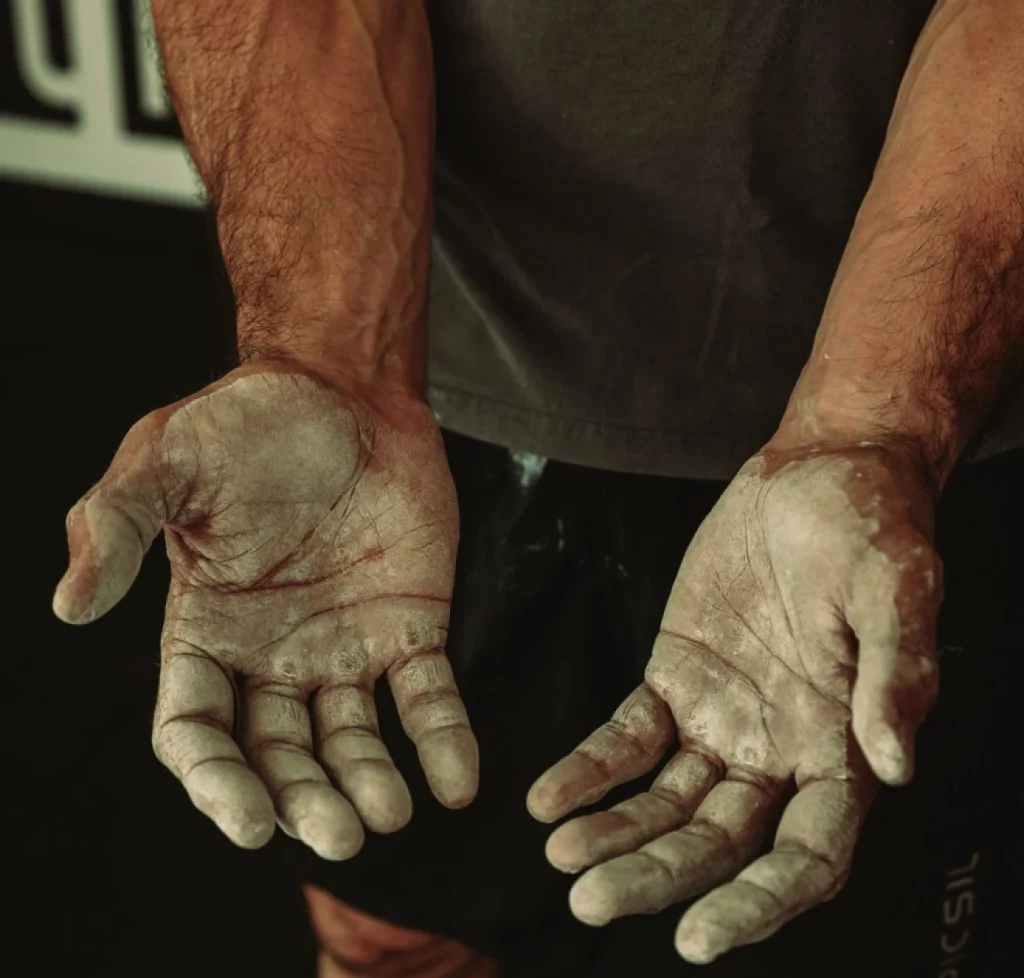
You don't need more strength: you need a process that supports you.
Every January the same script returns:
“This year my life is changing.”.
And, almost always, the change boils down to a marketable shortcut: the 5 AM club.
I know him well. And that's precisely why I question him.
Because getting up at 5 is not the cause of a profound change.
At best, it is the visible result of something much quieter: an aligned body, a less scattered mind, and an identity sustained by processes, not impulses.
Everything else is “psychological fast food”: Do it and everything will change..
The trap: confusing discipline with punishment
There is a part of the story that is rarely told:
To wake up naturally at 5, you first had to live differently.
It's not epic. It's physiology.
Your body doesn't negotiate with your motivational phrases. It adapts to your rhythms.
Waking up early, when it is healthy, is usually the consequence from a chain of prior behaviors: sleep, food, times, quantity, regularity. And consistency. A lot of consistency.
Discipline, properly understood, is not about "enduring pain" or "punishing yourself" to become a better person.
Is maintain balance for as long as possible, with flexibility according to times, seasons, conflicts and context.
From the outside, that looks like "discipline".
From the inside, it feels like coherence.
And almost no one sees the work that went into it. They only see the result.
The detail that changes the focus: the body as a calendar (and not as an obstacle)
In ancient traditions, getting up early is not an ego challenge.
It is a consequence of respecting an internal order.
In Traditional Chinese Medicine, 5 AM coincides with a phase of the organic cycle associated with lung, called “the master of energy”. At that time, breathing practices can promote a specific energy charge (ZONG) that is symbolically associated with vitality and longevity.
But here's the important part: That awakening cannot be forced.. It becomes natural when you've adjusted your life to the rhythm.
For waking up at 5 to be a “consequence” (and not violence), you need at least two complete 24-hour cycles of real adaptation:
- dietary correction (appropriate quantity, type, and times)
- wakefulness-sleep (appropriate quantity, quality, and schedules)
And this is where many people are deceived: they want the symbol (5 AM) without paying the real price (rhythm).
The dream that almost no one respects, but on which everything depends
If we're talking about healthy rest, a classic time frame is between 9:00 PM and 5:00 AM, covering stages of the organic cycle. For example:
- 19:00–21:00 | Pericardium
Linked to emotion and the end of the day: that moment when we usually tell our loved ones about our experiences. (The heart outward: the tongue; its expression: speech). - 9:00 PM–11:00 PM | Triple Heater
A transversal system that regulates and adjusts energetic and organic functions involved in energy creation, cleaning, and purification. - 23:00–01:00 | Gallbladder
Associated with deep rest: sleeping and relaxing. - 01:00–03:00 | Liver
Key time for mental rest and metabolism; symbolically described as cleansing of emotions, mind and blood. - 03:00–05:00 | Lung
Restart of the cycle: breathing, energy, opening of the day.
Do you see the point?
It's not "be a superhero." It's do the above so that the body doesn't have to defend itself against you.
Real change: it's not built on great achievements, but on support.
Most people start the year wanting to attack the top.
And it burns.
Change usually works more like a climber: it doesn't go up all at once.
It's gaining support from support to support., with technique, breathing, and a plan that holds up when fatigue sets in.
At this time of year, that's vital: choosing your supporters wisely.
Because often it's not a lack of strength. What's lacking is knowledge and guidance.
And here we enter the second part (the one that truly sustains the entire year):
The new identity does not depend on goals. It depends on ongoing processes.
An identity is not a trophy.
It is a living flow that is forged and renewed through continuous practice.
From Antonio Damasio's perspective on affective neuroscience, the "autobiographical self" is updated moment by moment, integrating bodily states, emotions, and memories. Therefore, a lasting identity change requires repeated experiential support: that which keeps the circuits involved active.
And if we look at humanistic and transpersonal psychology (Rogers, Jung, Grof), another uncomfortable idea emerges:
When you focus solely on “achieving goals,” you can reinforce a rigid identity, dependent on external success. Instead, regular processes They create an internal “habitat” where the self is reorganized with flexibility and meaning.
The practical question is not:
“What achievement do I want?”
But: “"What process makes me that person, even when there is no motivation?"”
Key operational principles: an identity based on processes (not promises)
| Dimension | Practical focus | Basis |
| Somatic-emotional | Breathing, interoception, and conscious movement to feel the body as the "home" of the self | Damasio: homeostatic regulation; Grof: body as portal |
| Narrative | Daily reflective writing + reframing (incl. EMDR approach to significant memories) | Shapiro: adaptive reprocessing; Rogers: congruence |
| Relational | Empathetic listening + honest feedback with secure attachment figures (therapist, group, stable bond) | Secure attachment; polyvagal theory; Jung: projection/shadow |
| Transcendent | Meditation (mindfulness or contemplative prayer) + creative flow or service | Grof: holotropic states; Jung: Archetypal Self |
| Behavioral discipline | Micro-habits anchored to daily triggers (upon waking / before going to sleep) | Psychology of habit; synaptic plasticity |
Why permanent processes work
- Meaningful Repetition
Each iteration consolidates neural and symbolic pathways: you replace dysfunctional patterns with more integrated ones. - Adaptive flexibility
You learn to update your internal narrative when the context changes, without losing cohesion. - Progressive self-regulation
Body and emotions become indicators of authenticity: you detect the dissonance between being and doing sooner. - Gradual deepening
Processes open up more subtle layers of identity (beliefs, values, worldview) that external goals rarely touch.
How to put it into practice (without turning it into another requirement)
- Initial mapping: Identify current routines and points of friction. Choose a single prioritized macro-process (e.g., 5 minutes of coherent breathing).
- Multisystemic anchoring: Each practice should include something sensory, something emotional, and something cognitive (cortical-limbic-brainstem integration).
- Periodic review: It evaluates lived experience, not just numbers.
- Celebration of continuity: strengthens identity through perseverance:
“I am someone who takes care of themselves every day,” not “I am someone who achieved X.”.
Closing: the year isn't changed by an hour. It's changed by a system.
If you want a new identity this year, stop asking yourself if you can handle "a big goal".
Ask yourself if you are willing to hold small processes which, over time, make you unavoidable.
Getting up at 5 doesn't make you disciplined.
It gives you away.
Either you're in balance... or you're at war with yourself.
Discipline is not suffering: it is maintaining balance when no one applauds you.