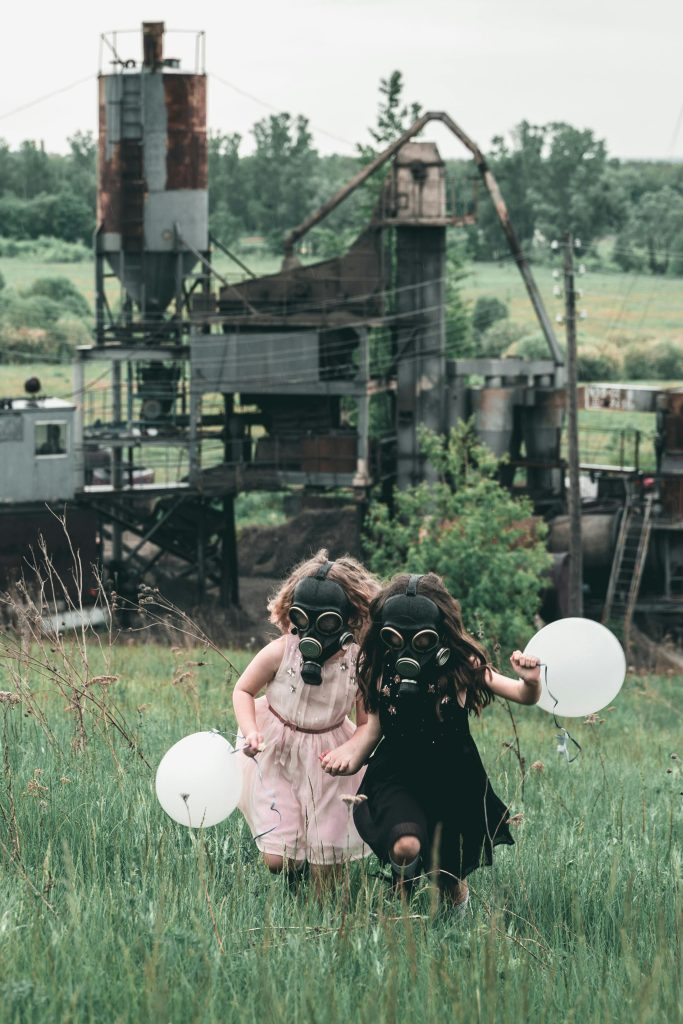
There are poisons that give warning and poisons that disguise themselves.
Thallium belongs to the latter group.
There are poisons that give warning and poisons that disguise themselves.
Thallium belongs to the latter group.
It doesn't burn, it doesn't smell strange, it doesn't cause a dramatic reaction when it enters the body. It does something much more effective: It is being passed off as potassium., It is an essential mineral for life. The body opens the same doors to it as to potassium, allowing it to enter the cells and distribute it throughout the body. It encounters no resistance.
Meanwhile, the damage progresses silently:
It sabotages the cell's energy, disrupts its electrical activity, and depletes its defenses. Ultimately, the heart—that electrical muscle that sustains everything—finds itself with no room to maneuver. A spike in blood pressure, a "normal" exertion, a poor night's sleep… and the system collapses.
The outcome is clear: a heart attack, cardiac arrest, multiple organ failure.
The underlying cause, however, has been a poison that resembled something good.
Thallium as a metaphor for our daily life
Most people won't be poisoned by thallium. But almost all of us live surrounded by it. symbolic equivalents of thallium:
- Pro-inflammatory and oxidative substances in what we eat, drink, and breathe.
- Work rhythms that chronically stress the nervous system.
- Continuous exposure to screens, noise, and other people's emergencies.
- Small and large traumas that do not integrate, they only accumulate.
The problem is exactly the same:
They don't seem like poisons. They are “normal”.
We eat what everyone else eats, we work like everyone else works, we sleep like everyone else sleeps, we carry the same fears and demands as half the planet. There's no clear red line, no before and after. There's a slow erosion.
There is no "drink of thallium" that we can point to.
There are thousands of small daily exposures that wear us down without making a sound.
The burnout society: when the poison is the system
Byung-Chul Han spoke about the “society of fatigue” to describe something we all recognize even if we don't know how to name it: a way of life in which an external tyrant is not needed, because we carry the tyrant within.
We are workers, caregivers, parents, partners, entrepreneurs, patients…
And in every piece of paper, the same silent message creeps in: "do more, perform better, demonstrate more, respond to everything, don't stop.".
It's not a specific toxic substance; it's the background climate. That climate in which:
- Nobody forbids you from resting, but everything pushes you not to.
- Nobody forces you to work 10 hours, but you feel guilty if you don't.
- Nobody is pointing a gun at you, but you push yourself to the point of exhaustion.
The result is an inflamed body, a hyperactivated nervous system, and, at the same time, a feeling of profound exhaustion. As if the entire organism were saying: “I can’t keep up with managing everything you put inside me and everything you demand of me from the outside.”.
The enemy is everywhere… and nowhere.
With thallium, at least, there is an identifiable poison.
In everyday life, the enemy is diffuse.
We don't have a community that acts as a filter, as a protective tribe that says:
“This won’t work,” “this hurts us,” “this is non-negotiable.”.
On the contrary:
- The toxic thing is standardized: products, schedules, ways of relating to each other.
- The painful part is made invisible"It is what it is," "It happens to all of us.".
- The inhumanity is there romanticized"You have to sacrifice yourself," "success requires suffering.".
And then something very specific happens that I see every day in my practice:
We feel unwell and we don't know where it's coming from.
We slept badly.
We have a headache.
Digestion fails.
The skin becomes inflamed.
Libido disappears.
The mind becomes foggy and anxious.
We keep going from specialist to specialist, with analyses and tests. Everything comes back "almost fine," "a little off," "nothing serious." But the body keeps saying something isn't right. The person enters a dangerous loop: they start to think the problem It's her, not its context, not its exhibitions, not its history.
That's the second layer of poison:
We are not only physically intoxicated and emotionally overstimulated; we are also disoriented. We cannot detect the "enemy" because it seems to be everywhere.
The desperation to find a single culprit
When you feel bad and don't know where it comes from, you look for specific culprits:
- “This will be the meal.”
- “This will be the job.”
- “"It will be the partner, the city, the age."”
And some of that may play a role, but the current way of life has one cruel characteristic: There is no single shot; there is a constant, low-intensity bombardment..
It's not just the sugar.
It's not just the mobile phone.
It's not just work stress.
It's not just the relationship that isn't working.
It's the sum. It's the overall way of life.
It is a chain of everyday thalias, each disguised as normality.
That's where despair appears:
“I feel unwell…”
I've had tests done…
I've changed a thousand things…
And I'm still the same. What else do I have to do? What's wrong with me?”
The body screams, the mind cannot translate, and the environment continues to push in the same direction: produce, endure, distract, continue.
Relearn how to detect poison
The solution is not to live in paranoia or to try to build an impossible bubble.
Stop by regain the ability to discern.
Some clear guidelines:
- Listen to your body before the statistics
Just because something is "normal" in the population doesn't mean it's healthy for you.
If your body becomes inflamed, exhausted, or disturbed by something, that something is your thallium, even if half the world feels "good" about it. - Turn down the noise so you can feel
With the nervous system overloaded, we cannot distinguish signals.
Sometimes it is necessary to remove stimuli (screens, noise, multitasking) before we can notice what is good for us and what is harmful. - Let's examine what we are calling "normal life"“
Many symptoms are not isolated illnesses; they are protests from the organization in the face of a way of life that is not sustainable in the medium term. - Rebuild community
No one is saved alone.
We need environments where we can talk about health without it seeming like a weakness, where there is permission to rest, to say "no" and to prioritize the human over the profitable.
From thallium to responsibility
Thallium serves as a mirror.
Kill because it looks to potassium.
In our lives, many things hurt us precisely because They look alike to what we need:
- Between food and edible product.
- Between rest and distraction.
- Between bonding and dependence.
- Between effort and self-exploitation.
The important question is not: “What specific poison is killing me?”.
The question is:
What everyday things have I normalized to the point of not recognizing them?
Because the heart—both physical and symbolic—doesn't usually fall in a day.
It is running out of energy, coherence, and support.
Until a small event triggers the collapse.
It's not about living in fear, but with clarity.
Thallium teaches us that the problem is not just the poison itself, but not knowing it's there.
And perhaps, in this society of exhaustion, the first act of profound health is to recover the simplest and most revolutionary gesture: to look carefully at what we allow into our body, our agenda and our life… and to have the courage to call it by its name, even if everyone around keeps saying that “it is normal”.