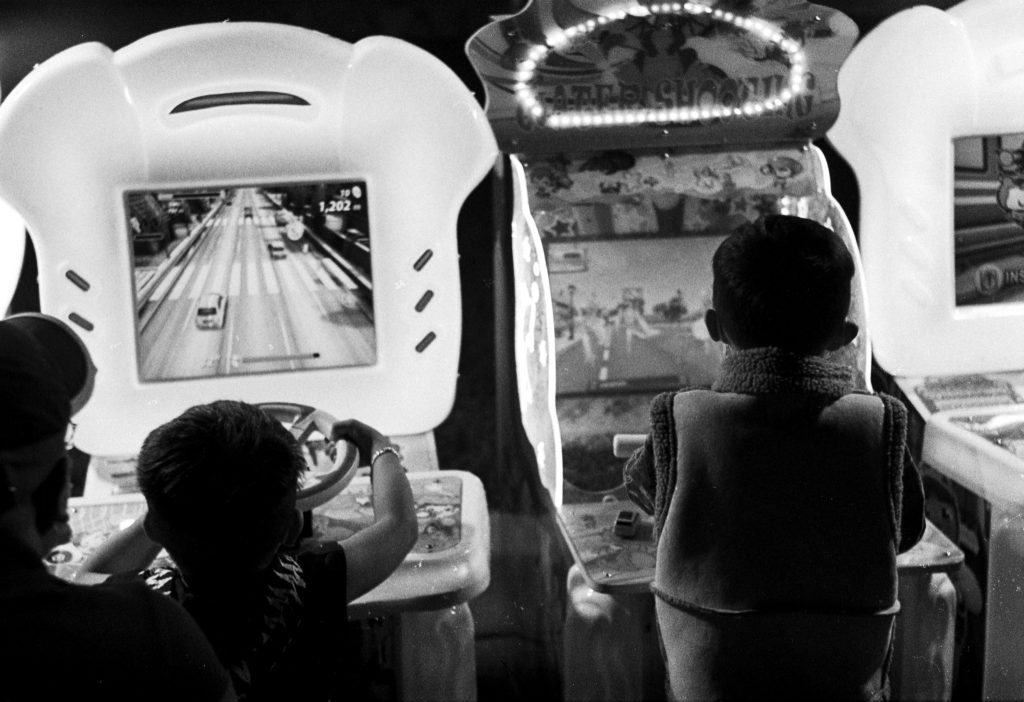
The game of living
Life isn't a stage set: it's a moving game board. We enter without a tutorial, with a body that feels, a history that shapes us, and an environment that molds us. Whether we like it or not, we play. The question isn't whether you participate, but what game you're playing and what rules you're following.
Level 1 — Survival
When everything is burning, the essential takes precedence. The objective is clear: keep going. Find a safe place, eat what you need, avoid harm. There's no aesthetics or drama here: there's only instinct. The body decides before you do; emotion dictates the move, and the mind chases after it. At this level, you don't choose your companions: you accept them because the alternative is emptiness. Every small victory feels like a feat.
Yes, it's a tough and not very "fun" game, but those who overcome it learn what others cannot buy with any privilege: the clarity of the basics.
A refuge where you breathe by counting to ten. You don't plan for spring; you survive winter.
Level 2 — Structured System
Once the urgency has passed, order emerges. Rules, milestones, evaluations. The board seems clean, and the manual promises rewards if you meet deadlines, metrics, and protocols. You work, you produce, you achieve objectives, you carve out "free time" to break the monotony. It works… until it no longer feels like it works.
Boredom sets in: you achieve, yet you're not fulfilled. The reward dwindles like a coin getting smaller and smaller. You accomplish everything except your own experience. The system provides certainties, but deprives you of questions. And without questions, there is no direction. A "Why?"
A state-of-the-art treadmill. You move forward… without moving from the spot.
Level 3 — Accumulation of Awards, achievements.
Those who climb the social ladder confuse playing with collecting prizes. They move from one space to another, seeking the next rush of satisfaction: "top" experiences, coveted places, objects that shine like someone else's, frictionless privileges. Their agenda becomes a catalog.
But fulfillment isn't achieved by accumulating trophies, because emptiness isn't filled with stimuli but with meaning. Sooner or later, weariness sets in. And weariness is an honest doorway: either you repeat the cycle with greater sophistication, or you dare to move on to the next game.
A personal museum where every display case is full… and you're not.
Level 4 — Cooperative Meaning
Here, at last, the map opens up. You discover that moving forward alone isn't really moving forward. You integrate what you've learned: the strength of the body that saved you, the structure that organized you, the experience that broadened you. You no longer compete for prizes; you build value.
This game demands two simultaneous movements: improving your avatar (your body, your mind, your ethics) and elevating your team (your tribe, your connections, your community). You understand that if you stray too far, you become an obstacle; if you fall behind, you drag others down. True progress is synchronous: growing and helping others grow.
From this summit you see the whole picture: you recognize the phases, you honor those who are still in them, and you choose where to put your energy.
A high-altitude team. Nobody gets to the top if someone lets go of the rope.
Common traps
- Staying to live in the shelter when there are no more bullets.
- Obey the system, even if it drains you.
- Confusing experience with purpose and reward with fulfillment.
- Forgetting the body that guides you, the bond that sustains you, and the responsibility to contribute.
Sober rules of fair play
1. Listen to your body before the noise. Emotion is your compass; use it to make informed decisions.
2. Structure without imprisoning yourself. Discipline is a tool, not a cell.
3. Experience is valuable, but it needs to be used wisely. If it doesn't transform you, it distracts you.
4. Shared purpose. Your progress matters; but the progress of those around you matters even more.
5. Structure and integrate. Don't start from scratch: update. Each level builds upon the next.
If you recognize yourself…
• In Survival: prioritize real security and basic energy; reduce fronts; request intelligent support.
• In the System: review your own goals versus inherited ones; negotiate rules; introduce margins of authenticity into your agenda.
• At the Awards: stop. Define why and with whom; prune stimuli, choose experiences that build identity.
• In the Cooperative: raise the bar of your virtue and your service. Excellence without service is polished ego; service without excellence is blind voluntarism.
The essentials
Some people get stuck in a phase, entertained by its challenges: surviving, accumulating credits, dominating or serving without discernment, collecting objects, chasing limits for sport. That's not life. Life is about progressing through levels, integrating what you've gained, and giving back what you've learned.
You don't need another board; you need another way to play.
When body, mind, connection, and purpose converge, the game ceases to be a circuit and becomes a journey. And on that journey, the goal is no longer a trophy: it's the version of yourself you deserve to offer to others.
From the true summit, you can see the entire map: the stages, their traps, and what truly matters. Don't advance alone; elevate your team. That's the difference between progressing to the next level and transcending the game.
• What phase are you playing in today?
• What rule are you going to change now to level up?
Leaderboard: those who have completed the game since Phase I
Science and technology
• Michael Faraday (UK): son of a blacksmith, apprentice bookbinder → father of modern electromagnetism.
• APJ Abdul Kalam (India): sold newspapers → aerospace engineer and president of India.
Business and leadership
• Ursula Burns (USA): social housing in New York → CEO of Xerox, first black woman to head a Fortune 500 company.
• Howard Schultz (USA): housing projects in Brooklyn → global expansion of Starbucks.
• Kalpana Saroj (India): Dalit origin, extreme poverty and child marriage → businesswoman who rescued and led Kamani Tubes.
Justice and public service
• Sonia Sotomayor (USA): Bronx and scarcity → Supreme Court Justice.
• Rigoberta Menchú (Guatemala): indigenous peasant woman in poverty → Nobel Peace Prize for human rights.
Art and culture
• Oprah Winfrey (USA): rural poverty and abuse → media mogul and philanthropist.
• Viola Davis (USA): hunger and precarious housing → EGOT and activist.
• Dolly Parton (USA): 12 Brothers in a Cabin → musical icon and great philanthropist in literacy.
• Carlos Acosta (Cuba): poor neighborhood of Havana → star of the Royal Ballet.